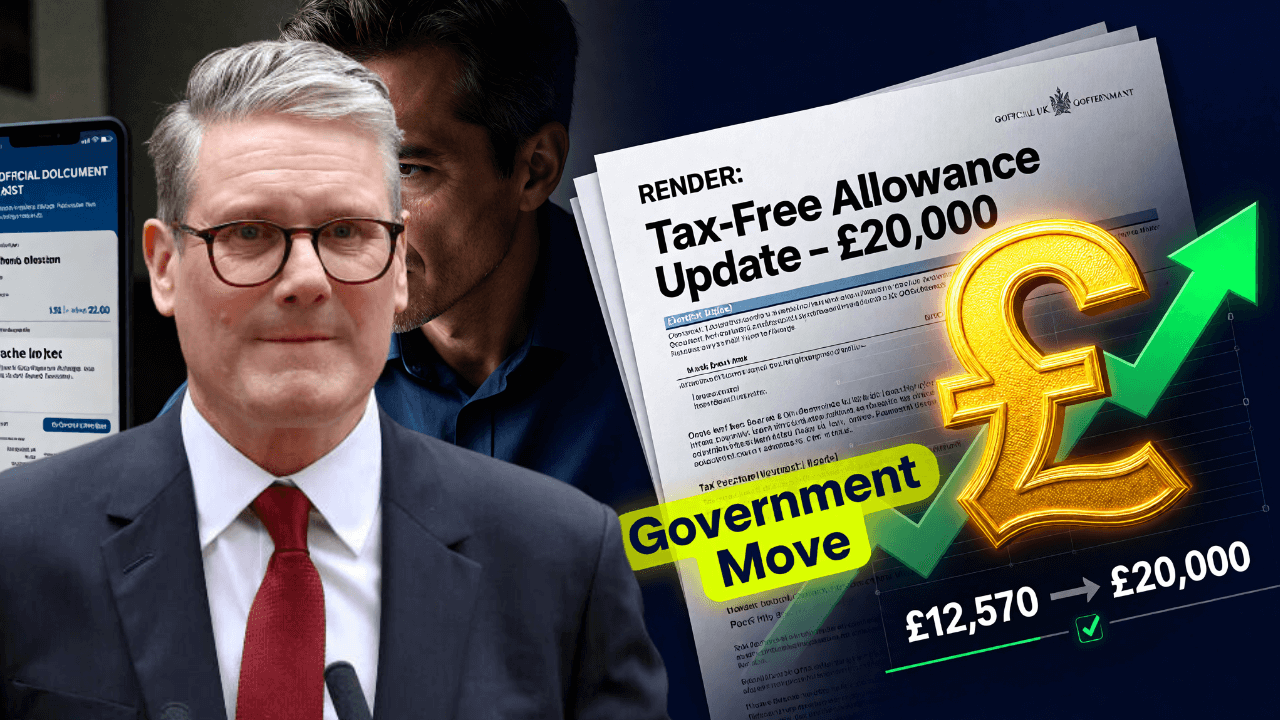
A major shift in the UK tax landscape could be on the horizon. Reports that the Government is moving to raise the Personal Tax Allowance from £12,570 to £20,000 have sparked widespread interest among workers, pensioners and small business owners alike.
For years, the personal allowance threshold has remained frozen at £12,570. With wages rising but tax bands standing still, many people have found themselves paying more tax without technically moving into higher earnings brackets. A potential increase to £20,000 would represent one of the biggest tax changes in recent decades.
But what would this actually mean in practical terms? Who benefits the most? And how realistic is such a move?
Here is a detailed and clear explanation of what raising the personal allowance could mean for households across the UK.
What Is the Personal Tax Allowance
The personal allowance is the amount of income you can earn before paying income tax.
Currently, most people can earn up to £12,570 per year before income tax is applied. Anything earned above that threshold is taxed at the basic rate of 20 percent (for most taxpayers in England and Northern Ireland).
The system is administered by HM Revenue and Customs, commonly known as HMRC.
If the threshold were increased to £20,000, it would significantly change how much of your income is taxed.
Why the Current Threshold Has Been Controversial
The £12,570 threshold has been frozen for several years. While it hasn’t gone down, inflation and wage growth mean that more people have effectively been pulled into paying tax.
This is often referred to as “fiscal drag.” Even without raising tax rates, the Government collects more revenue because earnings rise but tax thresholds stay the same.
For workers whose wages have increased to keep pace with living costs, this has felt like a hidden tax rise.
What Would a £20,000 Allowance Mean
If the personal allowance increased to £20,000, individuals could earn £7,430 more each year before paying income tax.
For a basic‑rate taxpayer, that could mean saving up to:
£7,430 x 20% = £1,486 per year
That is a substantial annual saving for many households.
For part‑time workers and lower earners, it could remove income tax liability altogether.
Who Would Benefit the Most
The biggest beneficiaries would likely include:
Lower and middle‑income earners
Part‑time workers
Self‑employed individuals
Pensioners with modest additional income
Someone earning £18,000 per year, for example, would pay no income tax at all if the threshold rose to £20,000.
However, higher earners would also benefit from the larger tax‑free portion of income.
What About Pensioners
Many pensioners rely primarily on the State Pension.
The State Pension itself can push retirees close to or above the current personal allowance limit, especially if they have additional private pension income.
Raising the allowance to £20,000 would reduce or eliminate income tax for many pensioners with modest supplementary income.
That could provide meaningful relief for older households managing rising living costs.
Would Everyone Qualify
Most UK taxpayers receive the standard personal allowance.
However, the allowance is reduced for high earners. Currently, it begins to taper once income exceeds £100,000.
Any reform increasing the threshold would likely retain a similar tapering mechanism for higher earners.
Exact details would depend on how legislation is structured.
Impact on Take‑Home Pay
The practical effect would be visible in monthly payslips.
Employees would see:
Less income tax deducted
Higher net pay
Greater disposable income
For someone saving £1,486 annually, that equates to roughly £124 extra per month.
For many households, that could cover energy bills, grocery costs or mortgage increases.
How Would This Affect Government Revenue
A rise to £20,000 would significantly reduce tax revenue unless offset by other measures.
The Government would need to consider:
Spending adjustments
Borrowing levels
Changes to other tax rates
Economic growth projections
Tax policy always involves balancing household relief with fiscal sustainability.
What About Scotland
Income tax rates in Scotland differ from those in England and Northern Ireland.
However, the personal allowance is still determined at UK level through HMRC.
If the allowance rises to £20,000, it would apply across the UK, though tax bands above that threshold may still differ regionally.
Would This Replace Other Support
A higher personal allowance is not the same as targeted benefits.
It applies broadly to taxpayers rather than focusing specifically on low‑income households.
While it could reduce the need for some support measures, benefits such as:
Universal Credit
Pension Credit
would remain separate from income tax policy.
Potential Economic Effects
Supporters argue that raising the personal allowance could:
Increase consumer spending
Boost economic growth
Improve work incentives
Reduce reliance on benefits
Critics argue it could:
Reduce public revenue
Benefit higher earners disproportionately
Require offsetting tax rises elsewhere
The overall economic impact would depend on how the policy is funded.
Example Scenarios
Consider Sarah, earning £25,000 per year.
Under the current system, she pays 20% tax on income above £12,570.
If the threshold rises to £20,000, she would pay 20% only on income above that new limit — dramatically reducing her annual tax bill.
Now consider David, earning £15,000 per year.
Currently, he pays tax on £2,430 of income. Under a £20,000 threshold, he would pay no income tax at all.
These examples show why the proposal has gained attention.
When Could It Happen
Major tax changes usually take effect at the start of a new tax year in April.
If approved, the change could potentially begin from a future fiscal year following parliamentary approval.
Such a large increase would require legislative changes and careful budget planning.
Why the Proposal Is Significant
The personal allowance has risen gradually in the past, but a jump from £12,570 to £20,000 would represent a dramatic increase.
It would signal a shift toward reducing the tax burden on working households.
For many families dealing with higher mortgages, rent, food and energy costs, a larger tax‑free income band could offer tangible relief.
Key Points to Remember
The personal allowance currently stands at £12,570.
A rise to £20,000 would significantly reduce income tax bills.
Lower and middle earners would benefit most in relative terms.
Pensioners with modest additional income could pay less tax.
Government funding decisions would determine implementation.
What You Should Do Now
At this stage, it is important not to make financial decisions based purely on proposals or early announcements.
Instead:
Monitor official statements from HMRC
Review your current tax code
Plan savings conservatively
Avoid assuming immediate changes
Until legislation is formally passed, the existing £12,570 threshold remains in place.
Final Thoughts
The idea of raising the personal tax allowance from £12,570 to £20,000 is bold and potentially transformative. For millions of workers and pensioners, it could mean hundreds — even thousands — of pounds in annual savings.
Whether the proposal becomes law will depend on economic conditions, political priorities and public finances. But one thing is clear: the discussion reflects growing pressure to ease the tax burden on ordinary households.
If implemented, such a change would reshape take‑home pay calculations across the country and mark one of the most significant tax policy shifts in recent memory.
For now, staying informed and understanding how the personal allowance works is the best way to prepare for any potential changes ahead.