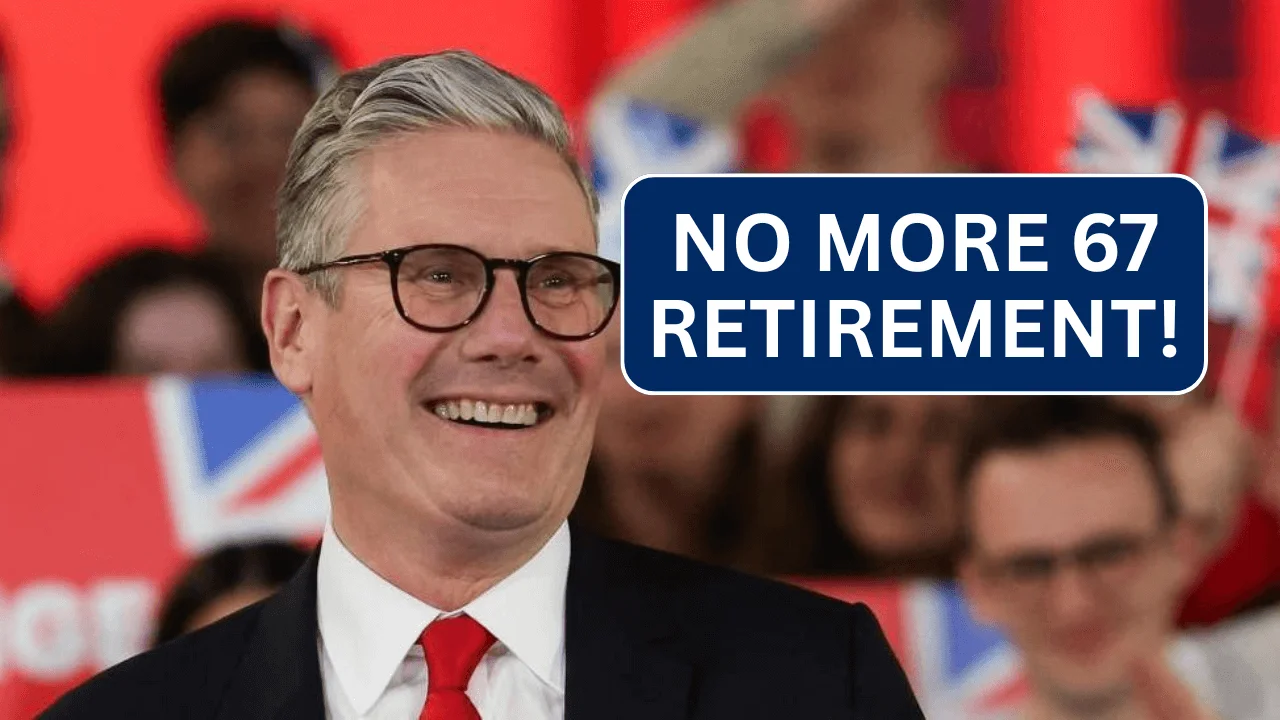
For years, many people across the UK have planned their retirement around a familiar number: 67. It became widely accepted as the age at which future retirees would begin receiving their State Pension. But that expectation is now shifting. With the government officially approving changes to the State Pension age timetable, the so‑called “67 rule” is no longer the final benchmark for millions of workers.
This does not mean that everyone suddenly has to work far longer overnight. However, it does signal a significant long‑term adjustment in how retirement is structured in the UK. If you are in your 40s, 50s or younger, this update could directly affect your retirement planning.
Here is a clear and detailed explanation of what has changed, who is affected and what it means for your financial future.
What Is the State Pension Age
The State Pension age is the age at which you can begin claiming your State Pension from the government.
It is important to understand that this is not the same as your chosen retirement age. You can retire earlier if you have sufficient savings or workplace pensions. However, you cannot claim the State Pension before reaching the official qualifying age.
The State Pension provides a regular income in retirement and forms a key part of many people’s long‑term financial planning.
What Was the 67 Rule
Under previous legislation, the State Pension age was scheduled to rise to 67 for people born after certain dates. For many workers, 67 became the expected milestone.
The transition to 67 followed earlier increases:
The age equalised for men and women.
It rose from 65 to 66.
Then legislation set a future rise to 67.
Now, the approved changes go further.
What Has Been Officially Approved
The government has confirmed plans within the established review framework that move beyond 67 for future retirees.
While people nearing retirement today may still retire at 66 or 67 depending on their date of birth, younger generations will face a higher qualifying age under the approved schedule.
This means that for some groups, the State Pension age will rise to 68, with future reviews potentially considering further gradual increases.
The decision follows recommendations and long‑term demographic projections.
Why the State Pension Age Is Increasing
There are several reasons behind this shift.
People are living longer than previous generations. Life expectancy improvements mean pensions are paid out for more years.
The population is ageing. There are proportionally fewer working‑age people supporting a growing number of pensioners.
Public finances must remain sustainable. The cost of pensions represents a significant portion of government spending.
The Department for Work and Pensions conducts periodic reviews to ensure the system remains financially viable.
Who Is Affected Most
The impact depends entirely on your date of birth.
If you are already close to retirement, your State Pension age may remain unchanged.
If you are in your mid‑40s or early 50s, you are more likely to be affected by the shift beyond 67.
Younger workers in their 20s and 30s should plan for the possibility of a qualifying age at 68 or higher.
Checking your personal State Pension forecast is essential for clarity.
Does This Mean You Must Work Longer
Not necessarily.
The State Pension age determines when you can claim your State Pension, not when you must stop working.
Some people retire earlier using private pensions or savings.
Others continue working beyond State Pension age by choice or necessity.
The key change is when the government pension becomes available.
How This Affects Retirement Planning
If you were planning to rely on the State Pension at 67, a higher qualifying age means you may need to bridge a gap.
That could involve:
Increasing workplace pension contributions
Saving more in personal pension schemes
Considering part‑time work later in life
Adjusting your retirement timeline
Even a one‑year delay can have a noticeable financial impact.
The Role of Workplace Pensions
Workplace pensions operate separately from the State Pension.
Many defined contribution pensions can be accessed earlier than State Pension age, subject to minimum age rules.
This means some people may still retire before reaching the new State Pension age, but they would need sufficient private income to support themselves until the government pension begins.
What About the Triple Lock
The “triple lock” protects annual increases to the State Pension. Payments rise each year by the highest of:
Inflation
Average earnings growth
2.5 percent
While the qualifying age may rise, the value of the pension continues to be protected under this mechanism.
This ensures that once you reach eligibility, the amount keeps pace with economic conditions.
Example Scenario
Imagine someone currently aged 45.
Under the new approved framework, their State Pension age may be 68 instead of 67.
If they planned retirement at 67 expecting immediate State Pension income, they would need to fund one additional year themselves.
That could require additional savings or income planning.
This example highlights why early awareness matters.
Concerns Raised by Critics
Some critics argue that raising the State Pension age affects people in physically demanding jobs more severely.
Manual workers or those with health conditions may struggle to remain in employment longer.
There are ongoing debates about whether certain groups should receive more flexible arrangements.
Balancing fairness with financial sustainability remains a complex policy challenge.
Regional Considerations
The State Pension age applies across England, Scotland, Wales and Northern Ireland.
Although some benefits are devolved, the State Pension framework remains a UK‑wide policy.
Therefore, the changes affect eligible individuals nationwide.
Checking Your Personal Pension Age
The safest way to understand your position is to check your State Pension forecast online.
Your forecast will show:
Your qualifying age
Your estimated weekly amount
Your National Insurance record
This personalised information is far more reliable than general headlines.
Will the Age Rise Again in the Future
State Pension age is reviewed periodically.
Future increases depend on:
Life expectancy trends
Economic forecasts
Political decisions
Public spending priorities
While no immediate further increase has been announced beyond the current framework, gradual long‑term adjustments are widely expected.
Financial Planning in Light of the Change
If you are affected by the shift beyond 67, consider reviewing:
Your pension contributions
Your projected retirement income
Your expected expenditure in retirement
Your savings strategy
Small adjustments made early can significantly reduce pressure later.
Key Points to Remember
The 67 rule is no longer the final benchmark for all workers.
Some future retirees will face a State Pension age of 68.
Changes depend on your date of birth.
You can retire earlier, but cannot claim the State Pension before eligibility.
Checking your personal forecast is essential.
Why This Matters for UK Workers
For many households, the State Pension forms the foundation of retirement income.
Changes to the qualifying age influence:
Retirement timing
Savings goals
Mortgage planning
Career decisions
Understanding these updates early allows you to adapt with confidence rather than react at the last minute.
Final Thoughts
The end of the so‑called 67 rule marks another step in the UK’s evolving retirement landscape. While the shift may feel unsettling at first, it reflects broader demographic realities and long‑term financial planning at a national level.
The key takeaway is preparation. Whether your State Pension age remains at 67 or rises to 68, knowing your personal timeline empowers you to make informed decisions.
Retirement planning is no longer built around a single universal age. It requires flexibility, awareness and forward thinking.
By staying informed and reviewing your pension strategy regularly, you can approach retirement with greater clarity and confidence — whatever the official age may be when your time comes.