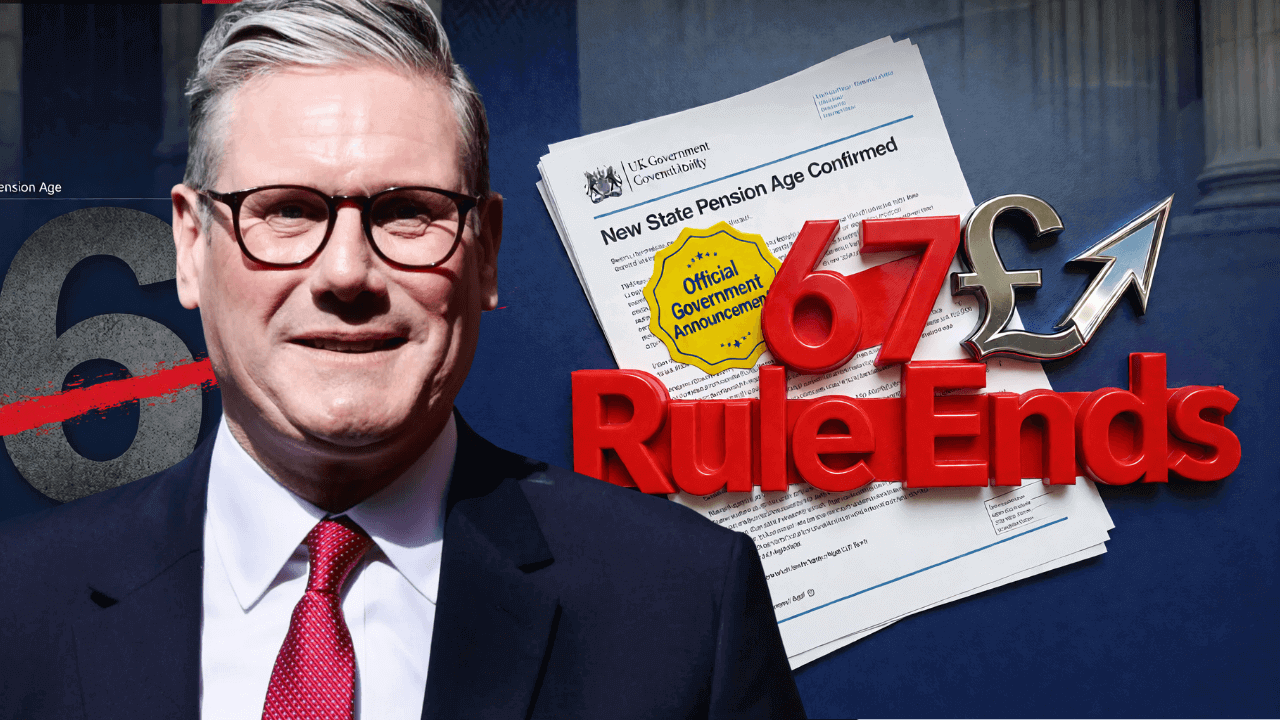
For decades, many people in the UK planned their retirement around a familiar milestone — 65, then 66, and more recently 67. But that long‑standing expectation is shifting once again. With the government confirming changes to the State Pension age framework, the idea of retiring at 67 is no longer guaranteed for future generations.
For some, this news brings concern. For others, it reinforces the need to plan ahead. Either way, understanding what the new State Pension age means — and how it could affect you — is essential.
Here’s a clear and practical guide to what’s changing, why it’s happening, and what it means for workers and future retirees across the UK.
What Is the State Pension Age
The State Pension age is the point at which you become eligible to claim your State Pension from the government.
It is not automatically the same as your retirement age. You can stop working earlier or later if you choose and can afford to do so. However, you cannot claim the State Pension until you reach the official qualifying age.
Over the years, this age has gradually increased.
How We Got Here
Historically:
Women could claim at 60.
Men could claim at 65.
Those differences were phased out to create equality, and the State Pension age rose to 66 for both men and women.
Legislation already scheduled a further increase to 67, and discussions have been ongoing about future increases beyond that.
Now, the next stage in that evolution has been approved.
What Has Been Approved
The government has confirmed plans within the existing legislative timetable that move beyond the 67 milestone.
While 67 will still apply to certain birth groups, younger workers will see their State Pension age rise further under the approved framework.
The shift reflects long‑term demographic changes, including:
Longer life expectancy
An ageing population
Pressure on public finances
This does not mean everyone suddenly retires later tomorrow — but it does reshape retirement planning for millions.
Why the Government Is Raising the Age
There are three main reasons behind State Pension age increases.
First, people are living longer on average. That means pensions are being paid for more years than in previous generations.
Second, the ratio of working‑age people to pensioners is shrinking. Fewer workers are supporting more retirees through taxation.
Third, maintaining the sustainability of the pension system requires adjustments to prevent excessive strain on public spending.
The Department for Work and Pensions reviews the State Pension age periodically to ensure long‑term affordability.
Who Is Affected Most
The impact depends on your date of birth.
If you are already close to State Pension age, your date is unlikely to change dramatically.
However, if you are in your 40s or 50s, you may need to prepare for a State Pension age higher than 67.
Younger workers in their 20s and 30s may see further gradual increases in the future.
Does This Mean You Must Work Longer
Not necessarily.
The State Pension age determines when you can claim your State Pension — not when you must stop working.
Some people retire earlier using private pensions, workplace pensions or savings.
Others continue working beyond State Pension age for personal or financial reasons.
The change affects eligibility for government pension payments, not your right to retire.
What About Workplace Pensions
Workplace and private pensions operate separately from the State Pension.
You can often access defined contribution pensions from age 55 (rising to 57 in the future), depending on regulations.
This means some people may still choose to retire before reaching State Pension age — but they would need sufficient private income to bridge the gap.
How This Affects Retirement Planning
If the State Pension age rises beyond 67 for your age group, you may need to:
Review your workplace pension contributions
Increase private savings
Adjust your retirement timeline
Consider part‑time work later in life
Planning early reduces financial pressure later.
The Role of the Triple Lock
The State Pension amount itself is protected by the “triple lock” policy, which increases payments each year by the highest of:
Inflation
Average earnings growth
2.5%
While the age of access may rise, the triple lock aims to protect the value of payments once you qualify.
Concerns Raised by Critics
Some critics argue that raising the State Pension age disproportionately affects:
Manual workers in physically demanding jobs
People with shorter life expectancy
Those in poorer health
They suggest flexibility or earlier access for certain groups may be necessary.
The debate around fairness versus financial sustainability continues.
Regional Differences
It’s important to note that State Pension age rules apply across England, Scotland, Wales and Northern Ireland.
The age framework is a UK‑wide policy.
However, devolved governments may operate separate benefits or travel concessions linked to age.
Example Scenario
Imagine someone currently aged 45.
If legislation schedules the State Pension age at 68 for their birth group, they would not be able to claim their State Pension at 67.
They would need to wait until 68, even if they choose to stop working earlier.
This highlights why understanding your personal State Pension forecast is essential.
How to Check Your State Pension Age
You can check your personal State Pension age and forecast through GOV.UK.
Your forecast will show:
Your qualifying age
Your estimated weekly payment
Your National Insurance record
Reviewing this information regularly helps you plan effectively.
Will the Age Rise Again
State Pension age is reviewed periodically.
Future increases depend on:
Life expectancy trends
Economic conditions
Political decisions
While no one can predict exact future changes, gradual rises over decades are widely expected.
Financial Impact on Households
For households planning retirement at 67, a one‑year delay may require:
Additional savings
Extended employment
Temporary income strategies
Even a short delay can have budgeting implications.
That’s why early preparation matters.
What About Early Access
Currently, there is no standard option to claim the State Pension early at a reduced rate.
You must wait until your official qualifying age.
This differs from some private pension arrangements that allow flexible access.
Key Points to Remember
The State Pension age is rising beyond 67 for certain birth groups.
Changes depend on your date of birth.
You can retire before State Pension age, but payments begin only at the qualifying age.
The triple lock still protects annual increases.
Planning ahead is more important than ever.
Why This Matters
For many people, the State Pension forms a crucial part of retirement income.
Even if you have private savings, the State Pension often provides a stable financial foundation.
Knowing when you can access it shapes long‑term financial decisions.
While the phrase “Goodbye to Retiring at 67” may sound dramatic, the reality is a gradual adjustment designed to balance longevity and affordability.
Final Thoughts
The approval of a higher State Pension age marks another step in the UK’s evolving retirement landscape. For some, it means adjusting expectations. For others, it reinforces the need to strengthen personal pension planning.
Retirement is no longer defined by a single fixed age. It’s shaped by health, savings, career choices and government policy.
If you’re unsure how the changes affect you, checking your personal State Pension forecast is the best place to start.
Planning today ensures greater confidence tomorrow — whatever age retirement eventually arrives.